
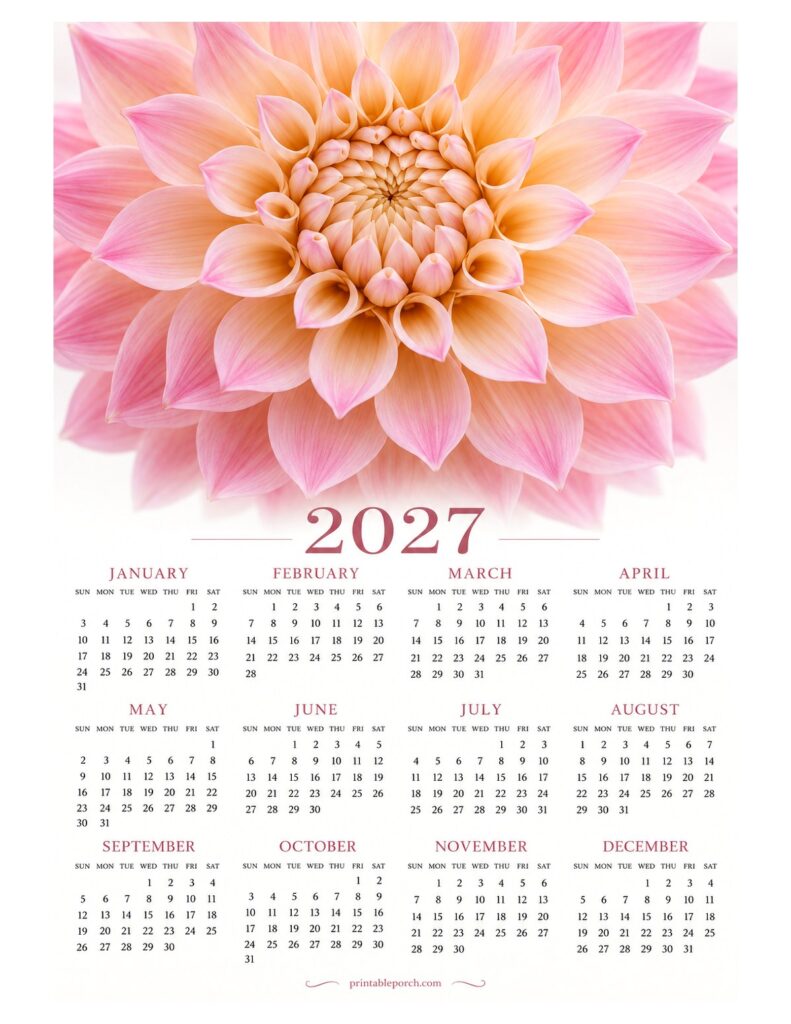
 19 free designs below
By: Printable Porch Team
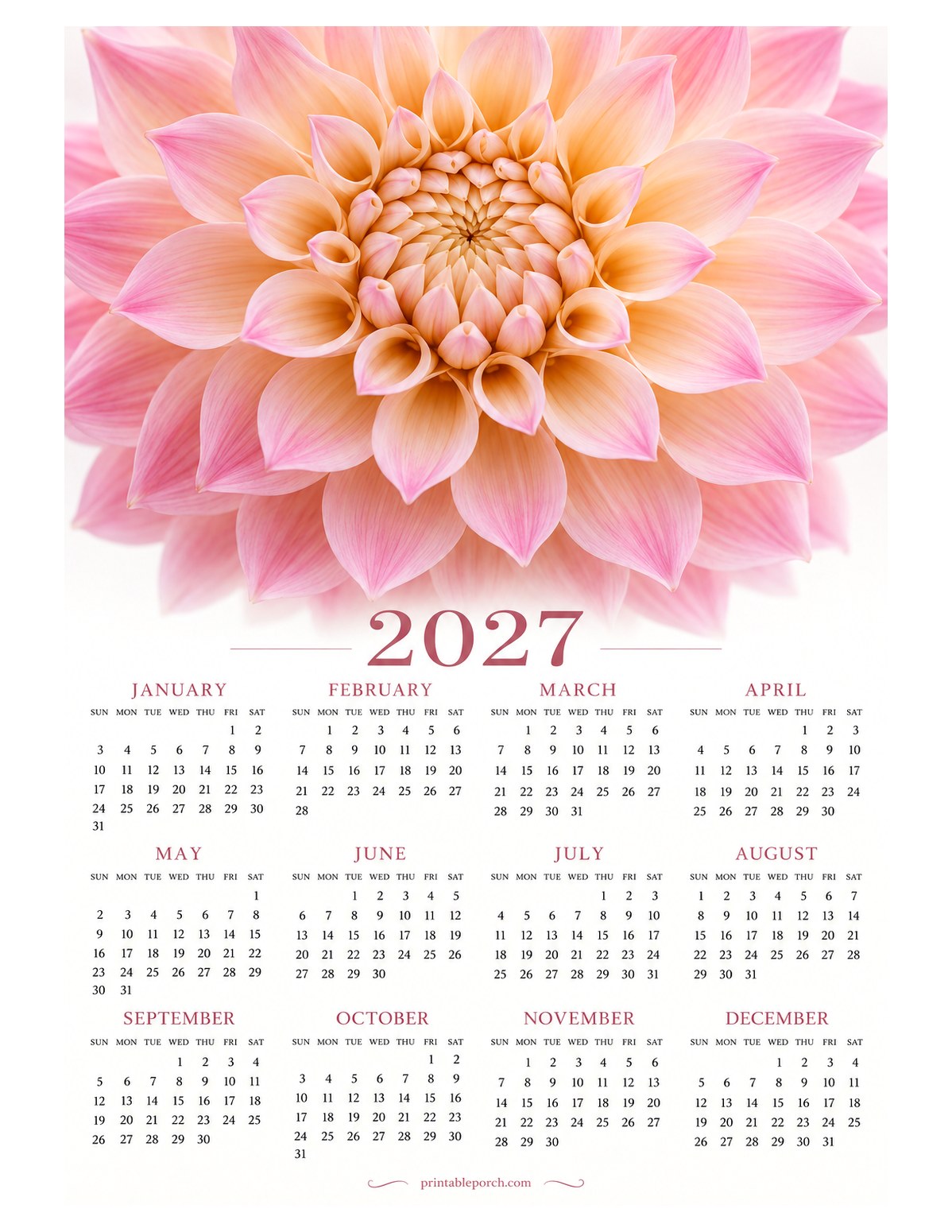
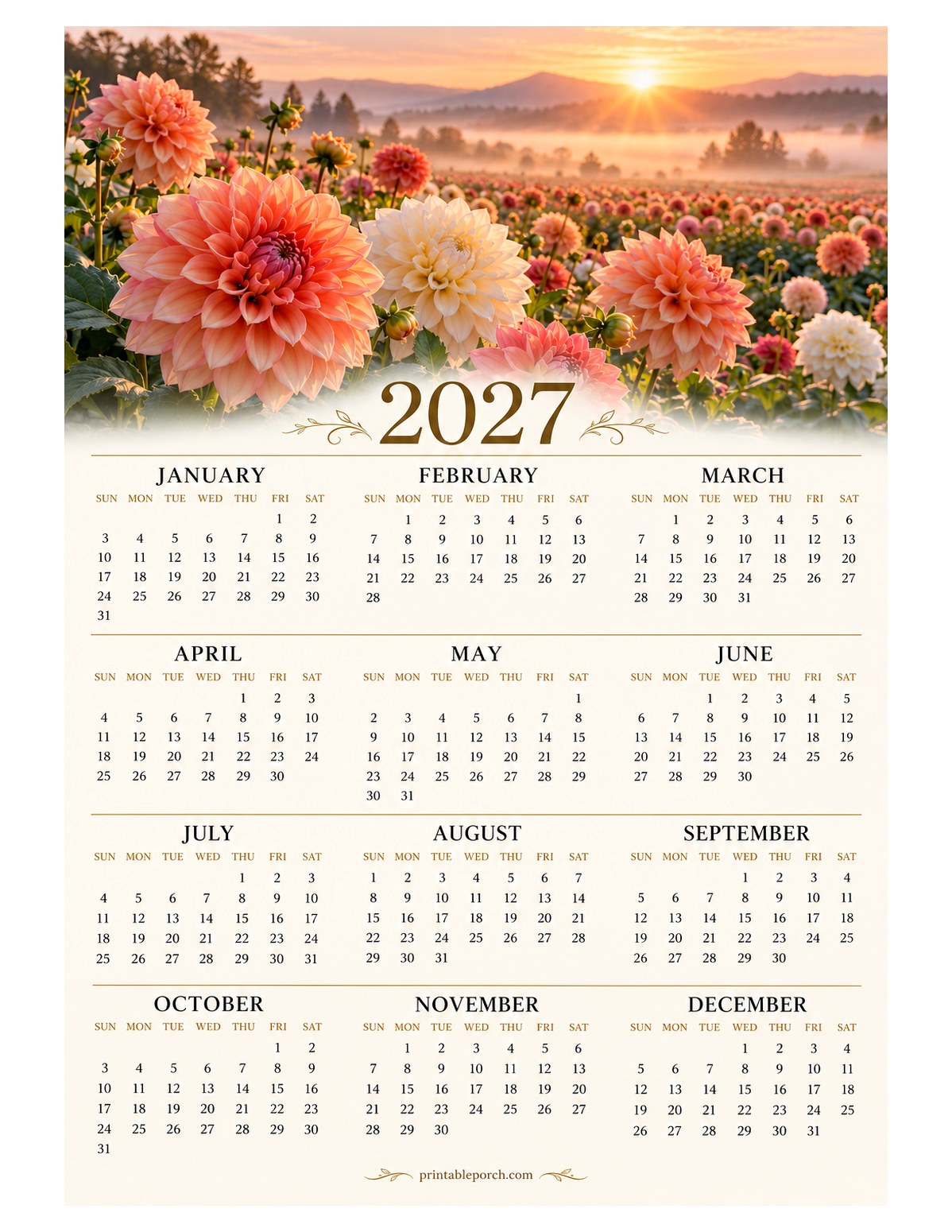
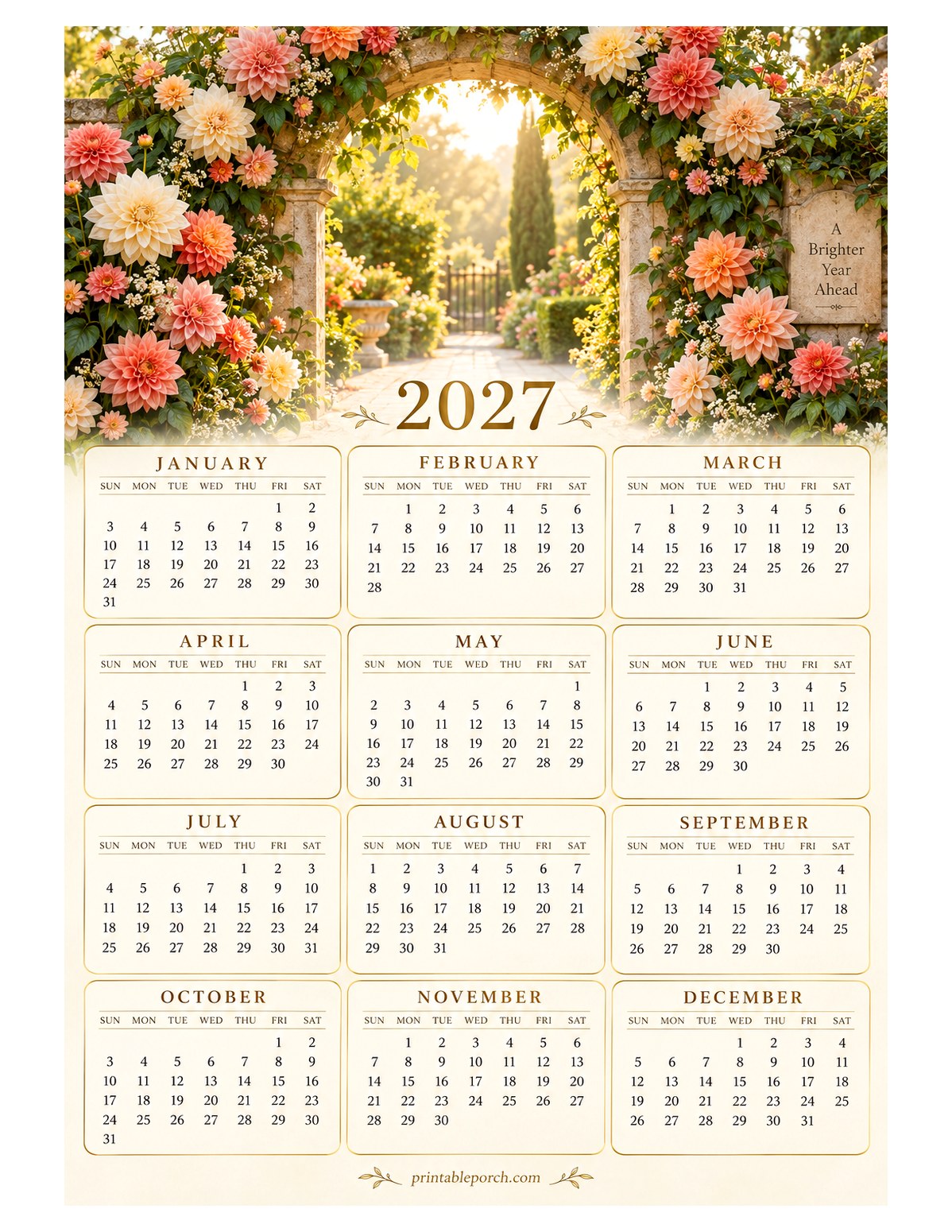
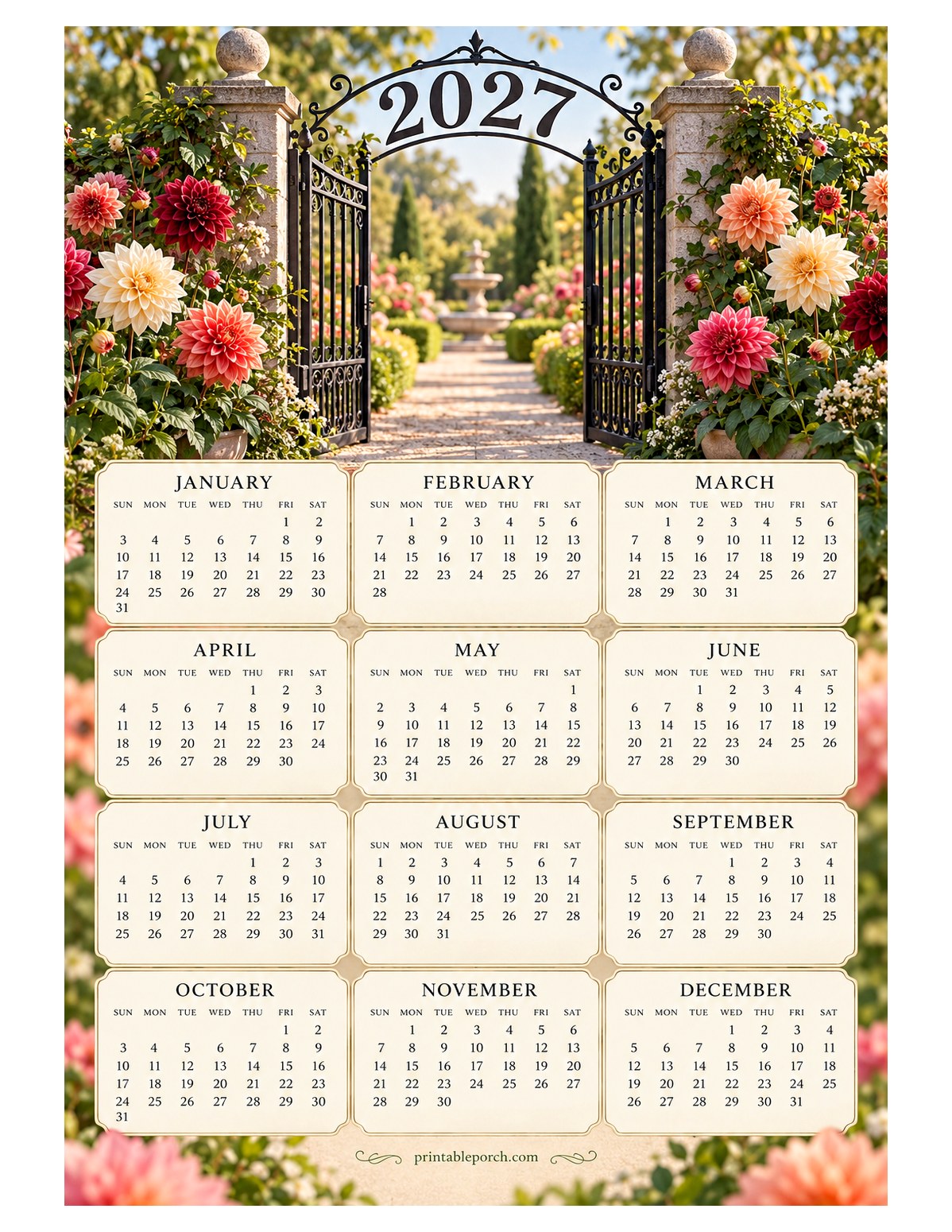
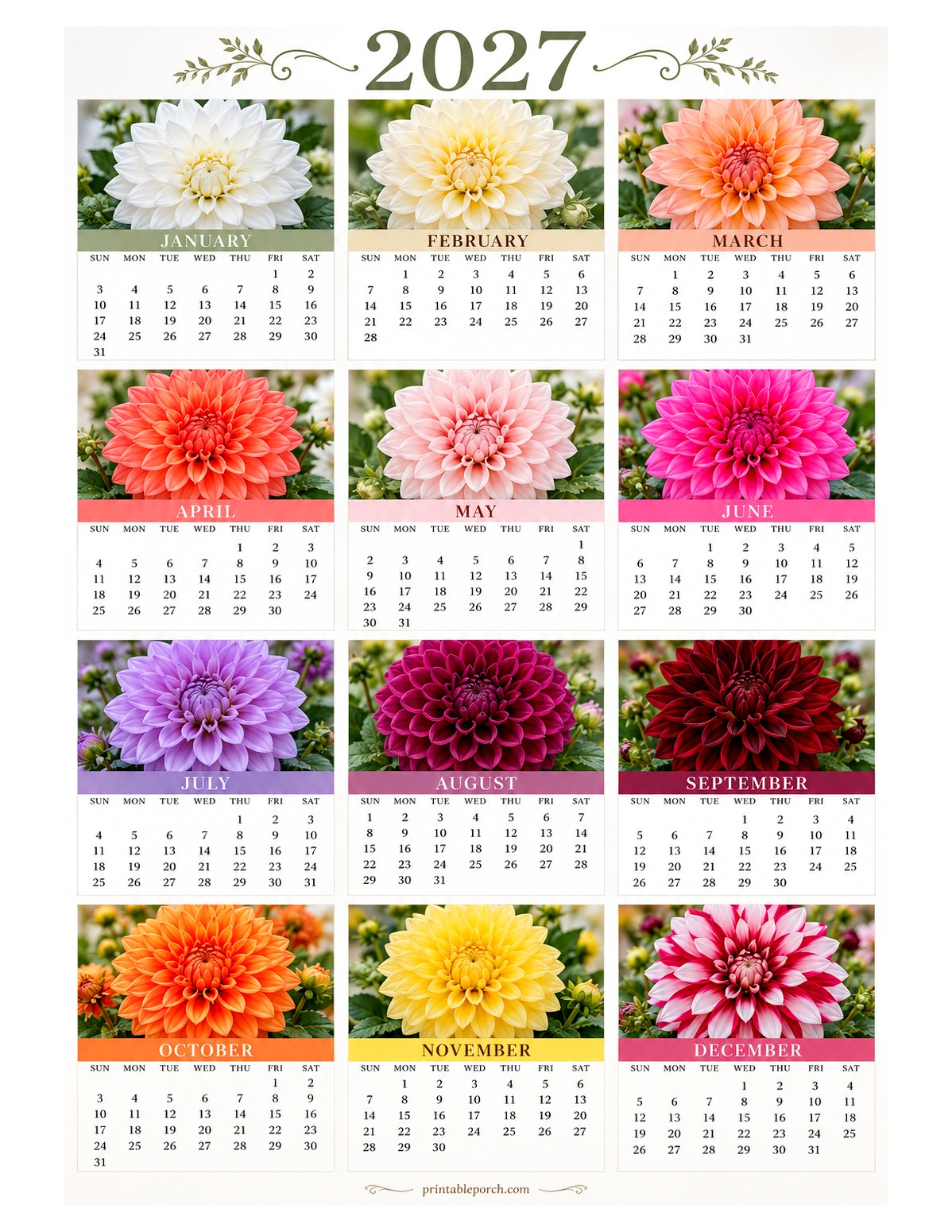
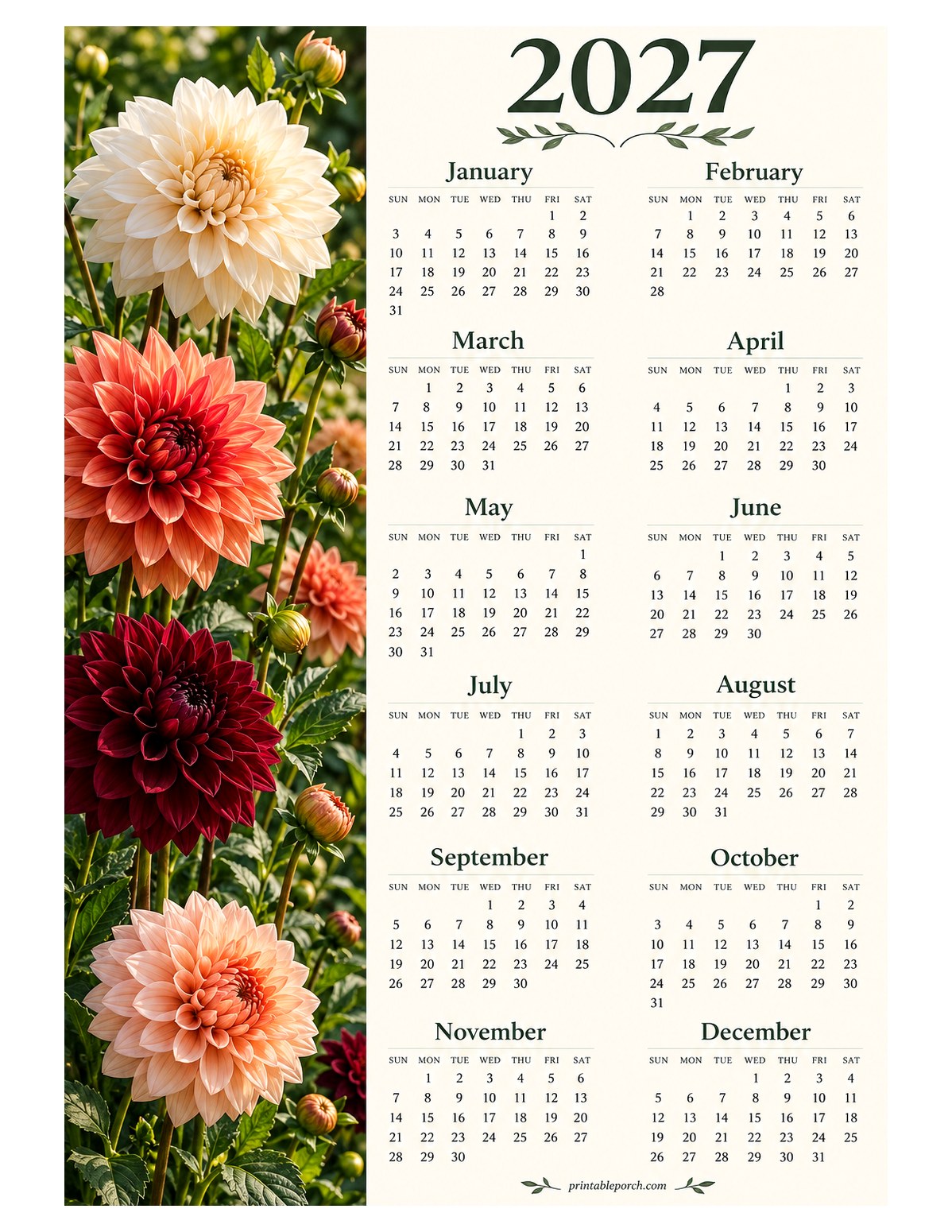
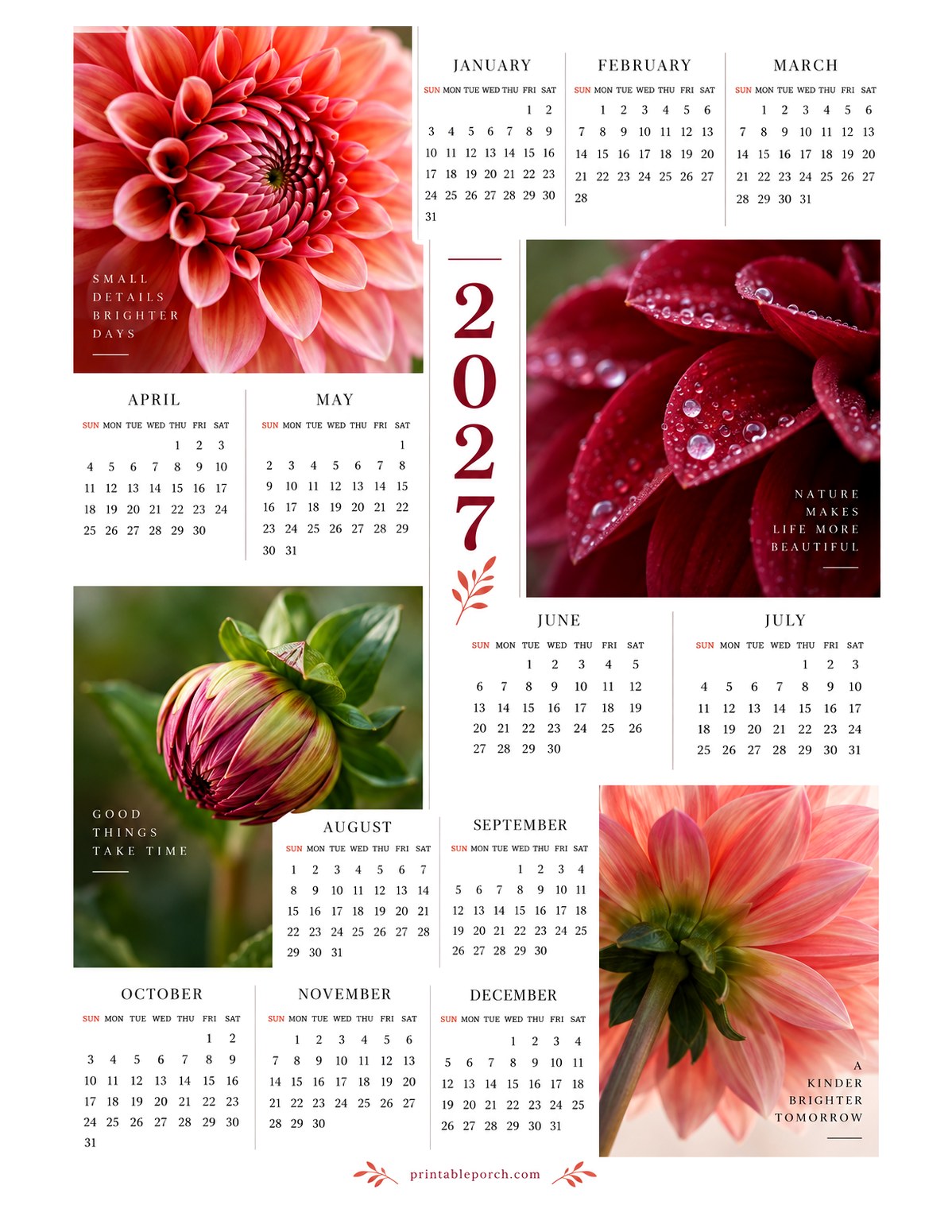
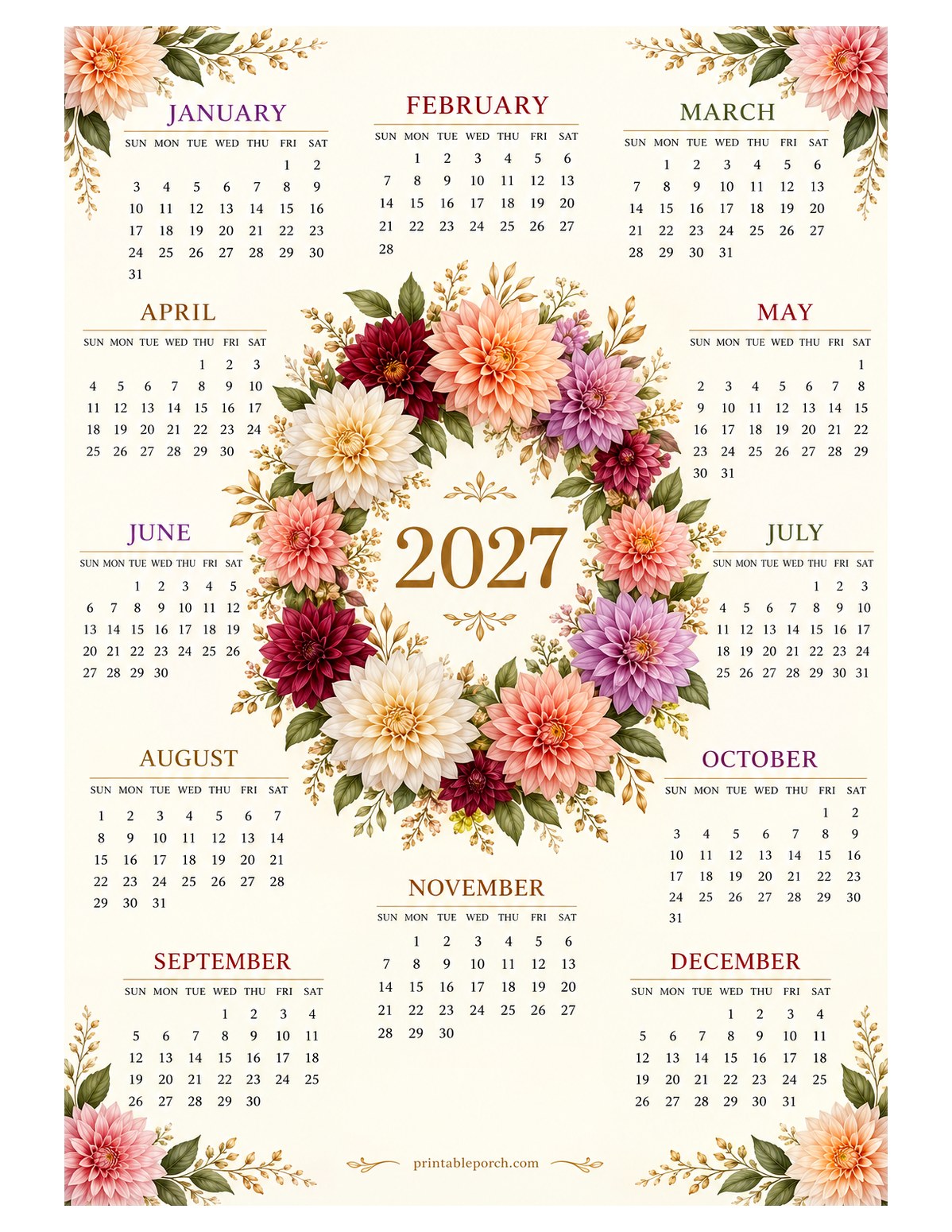
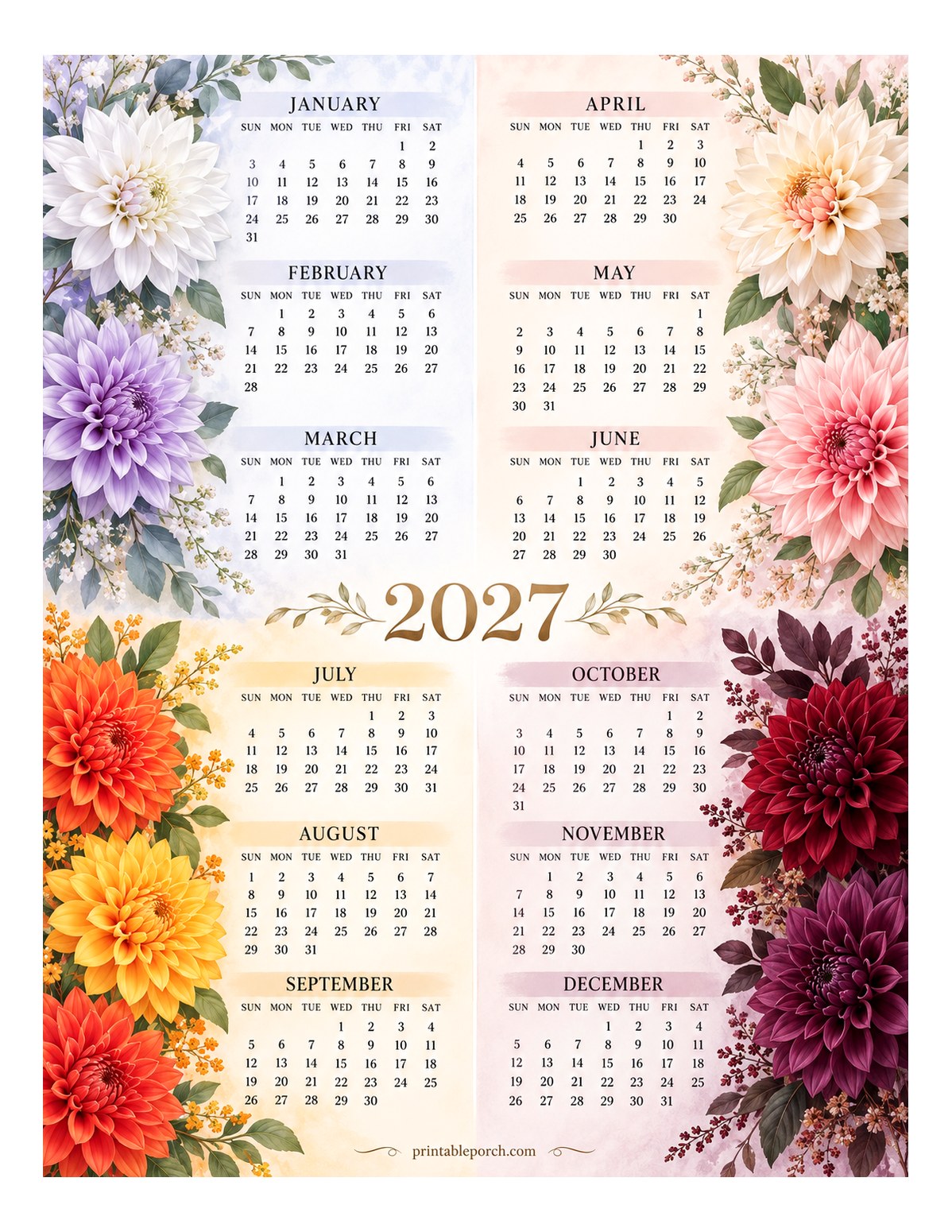
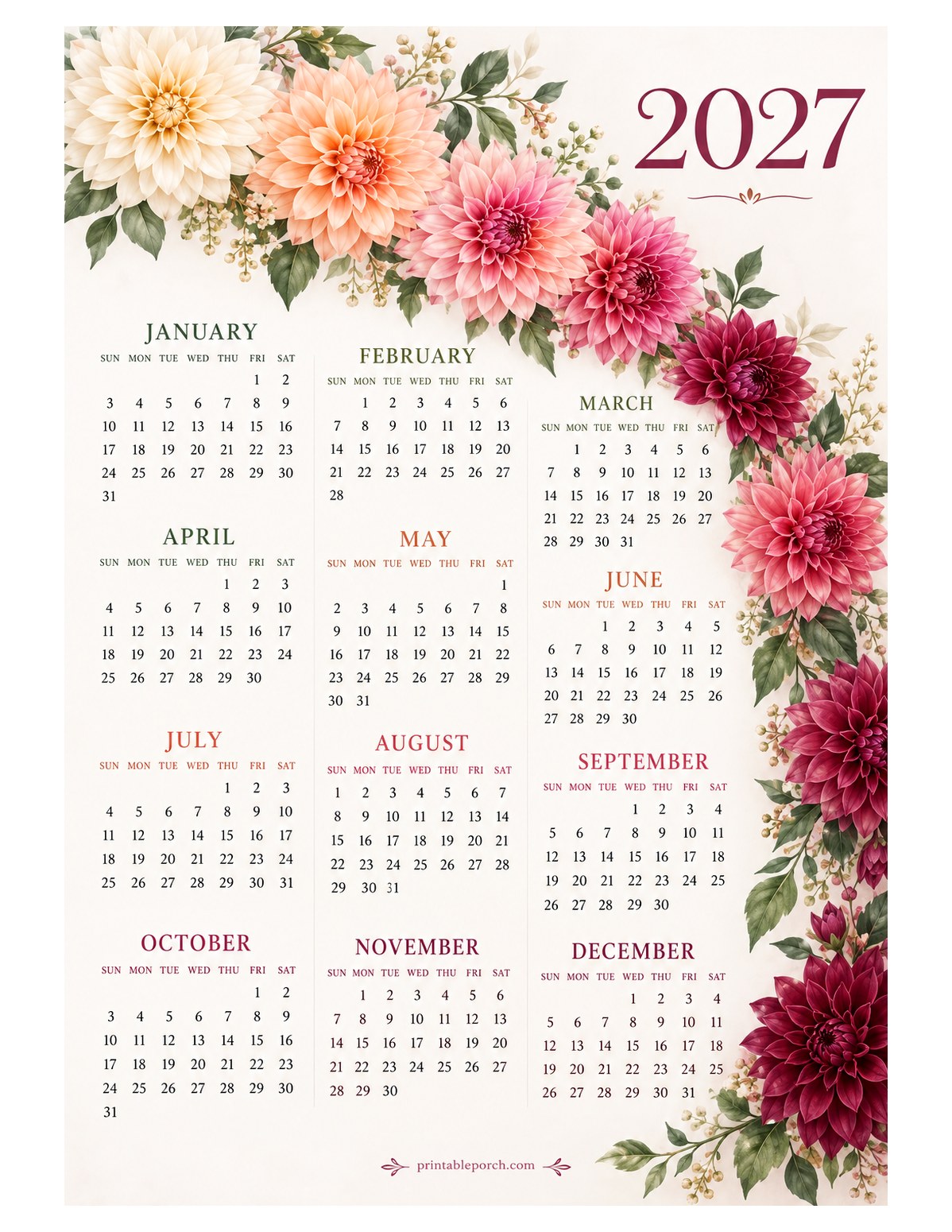
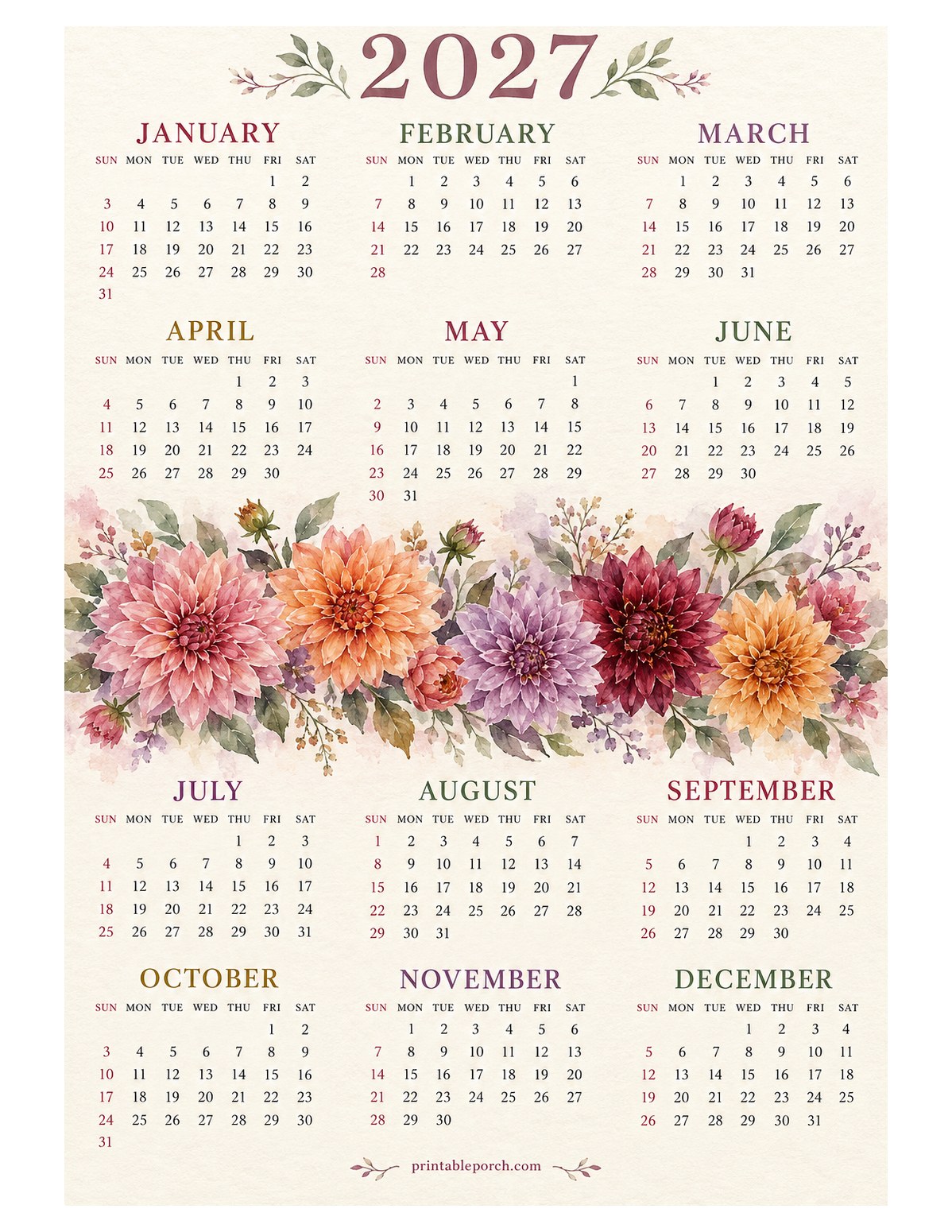
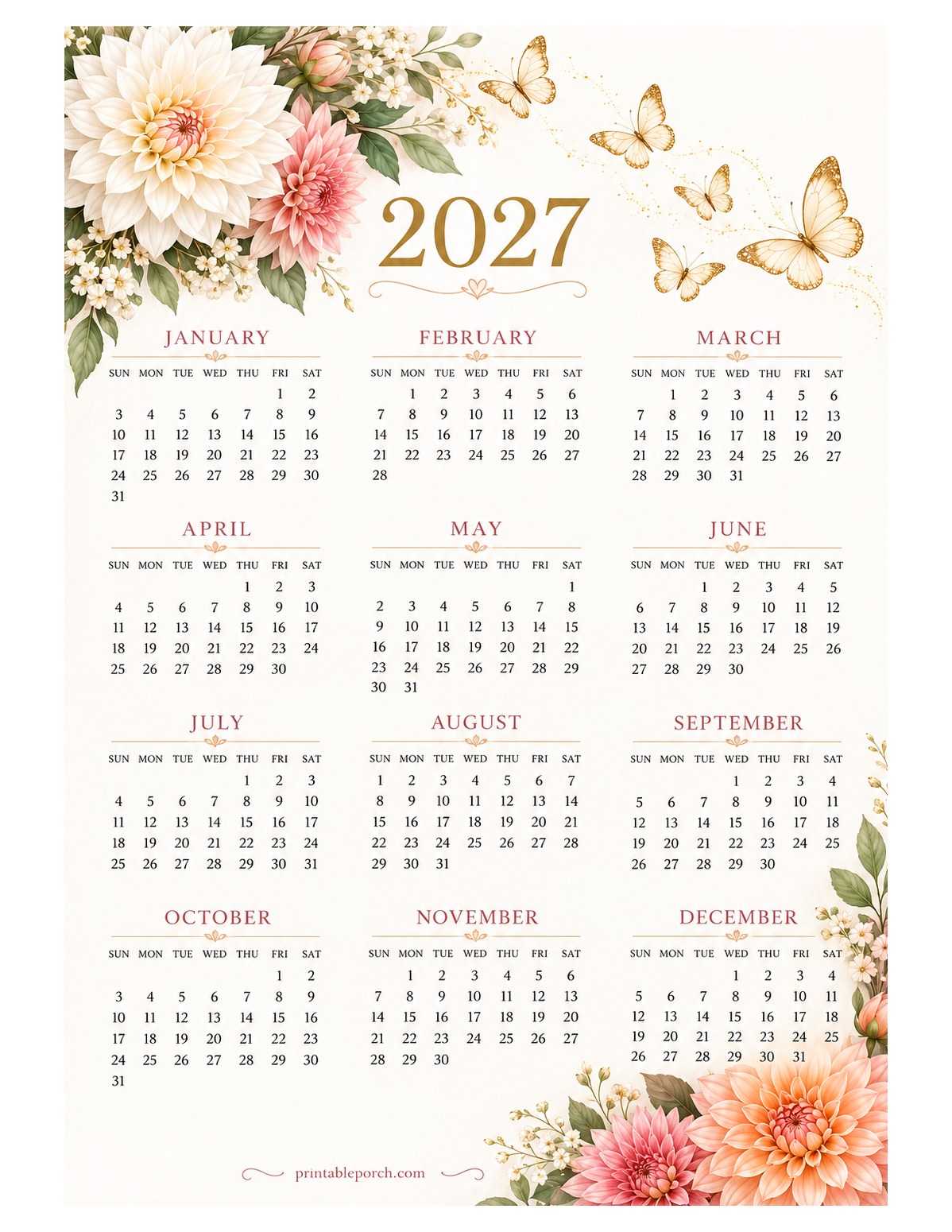
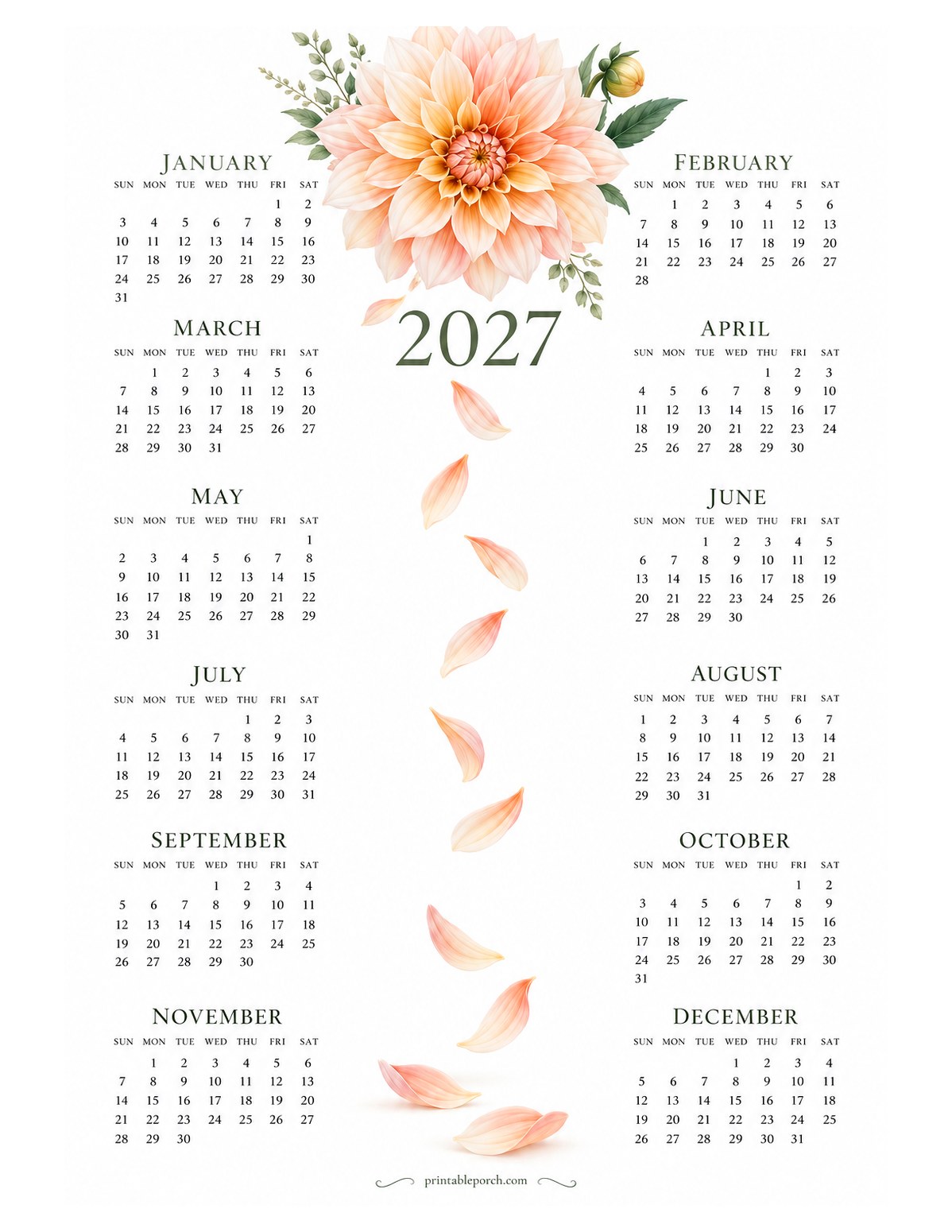
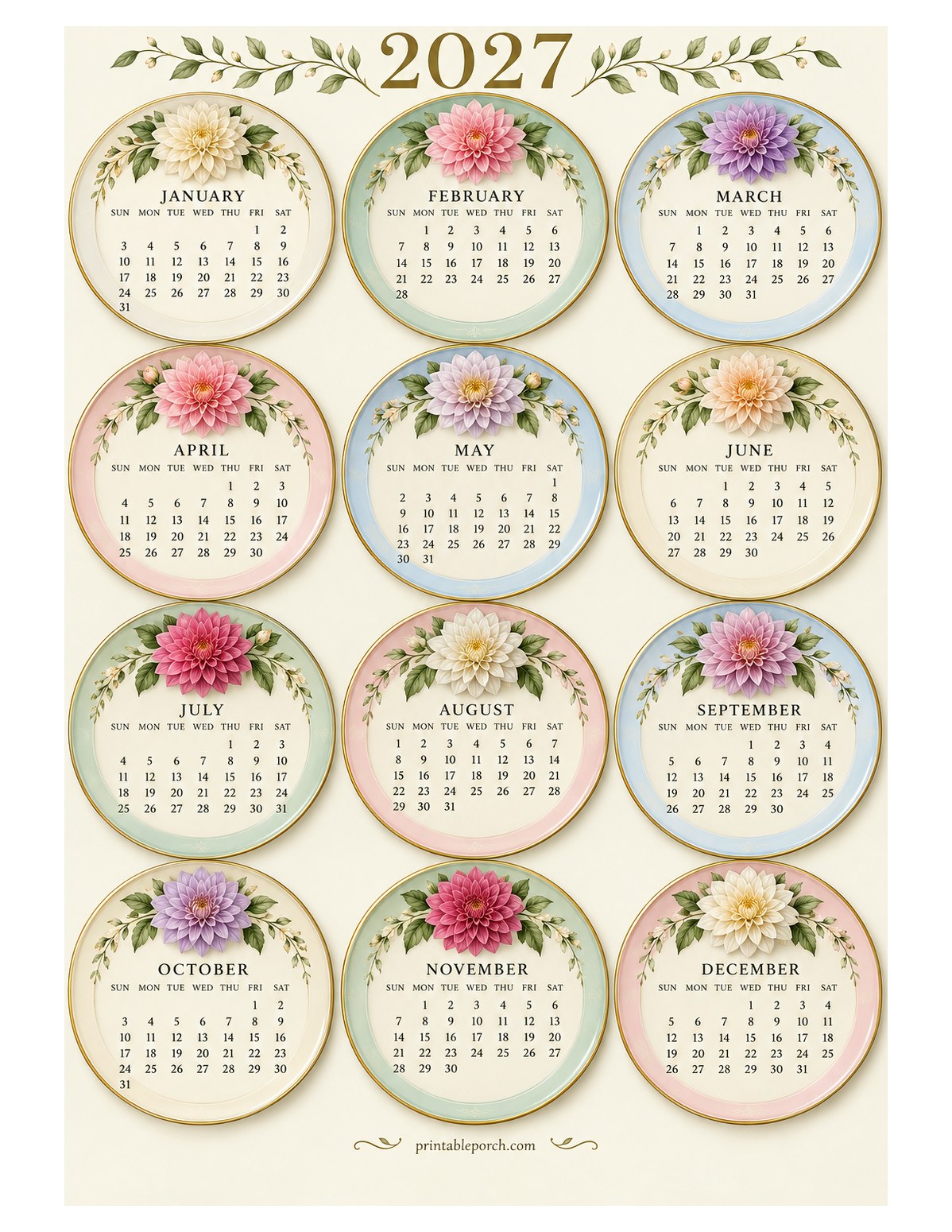
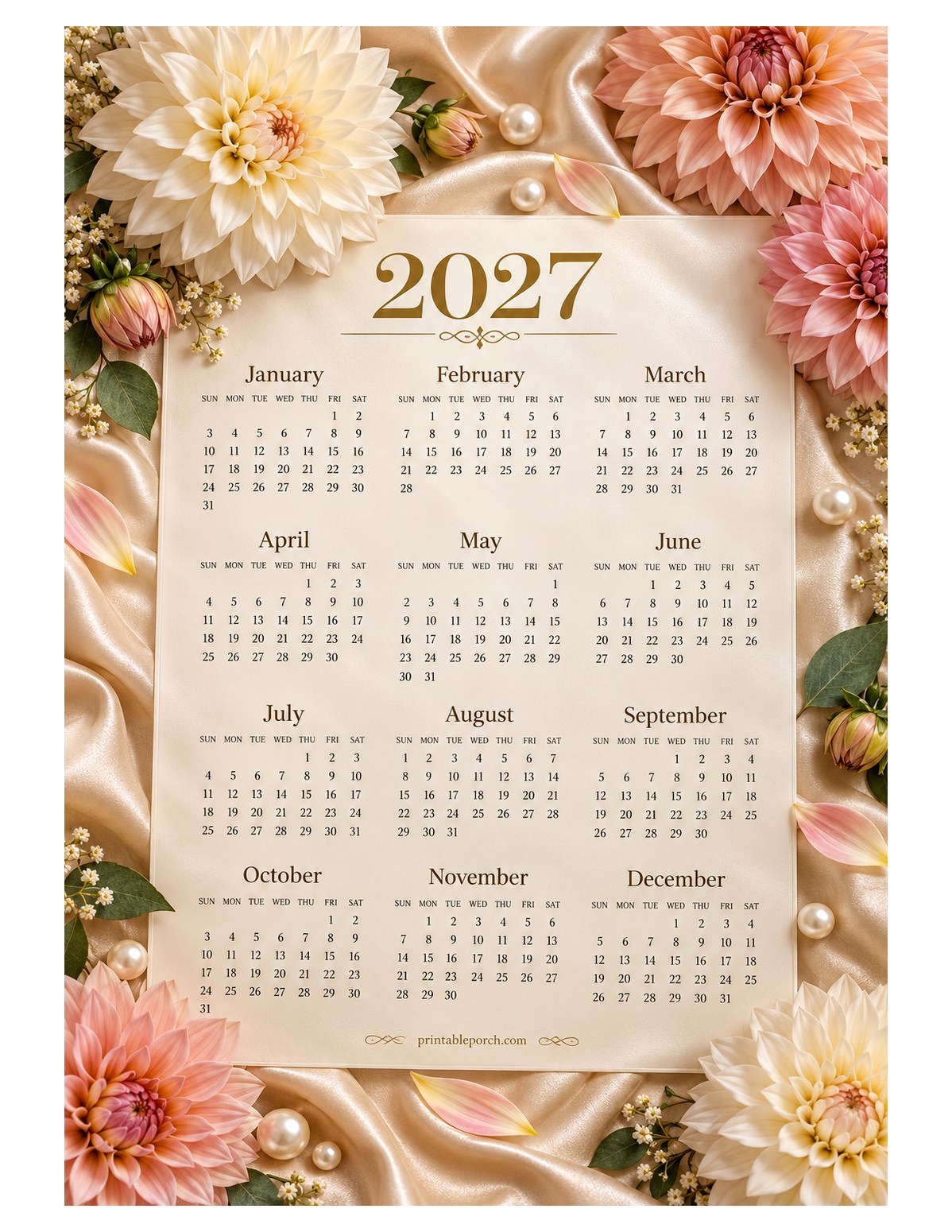
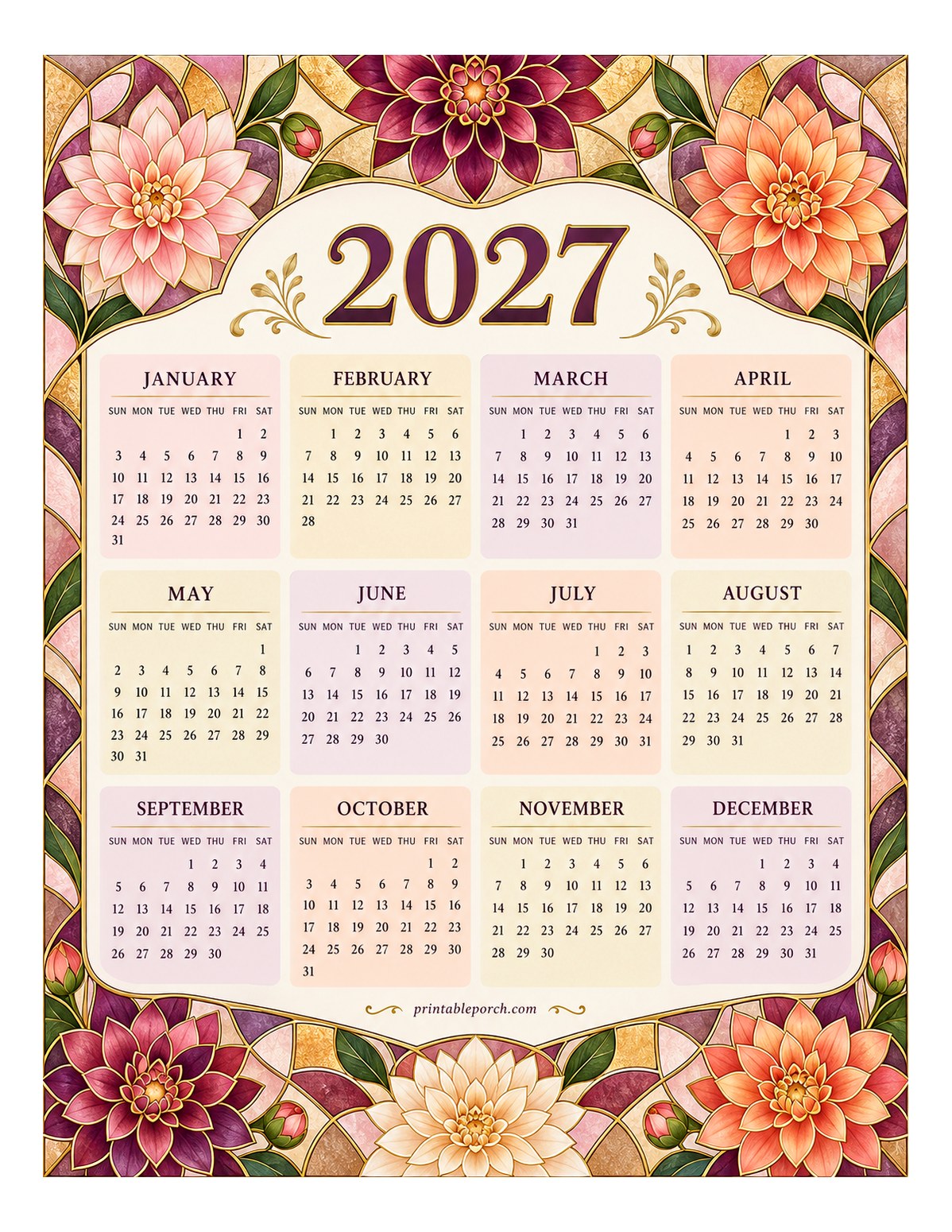
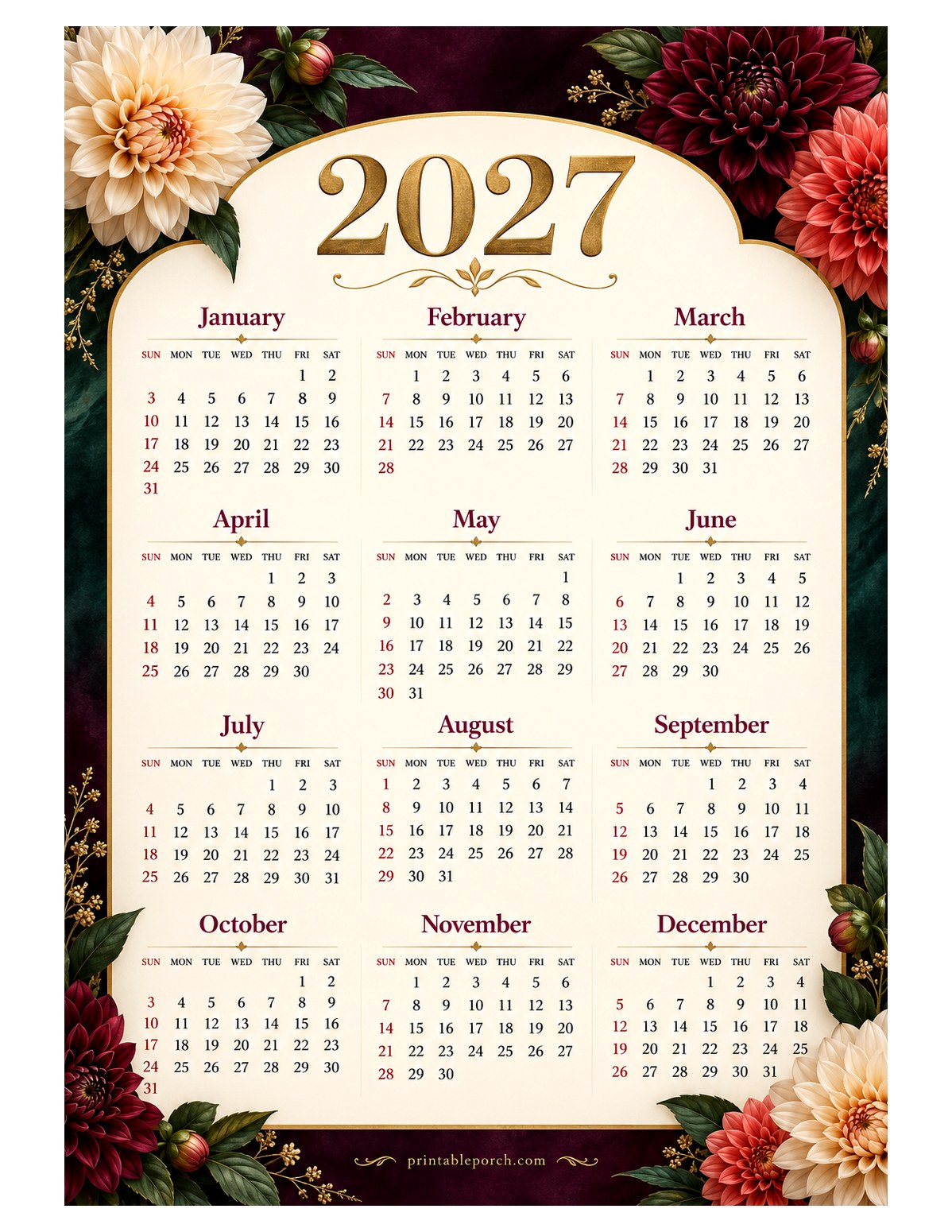
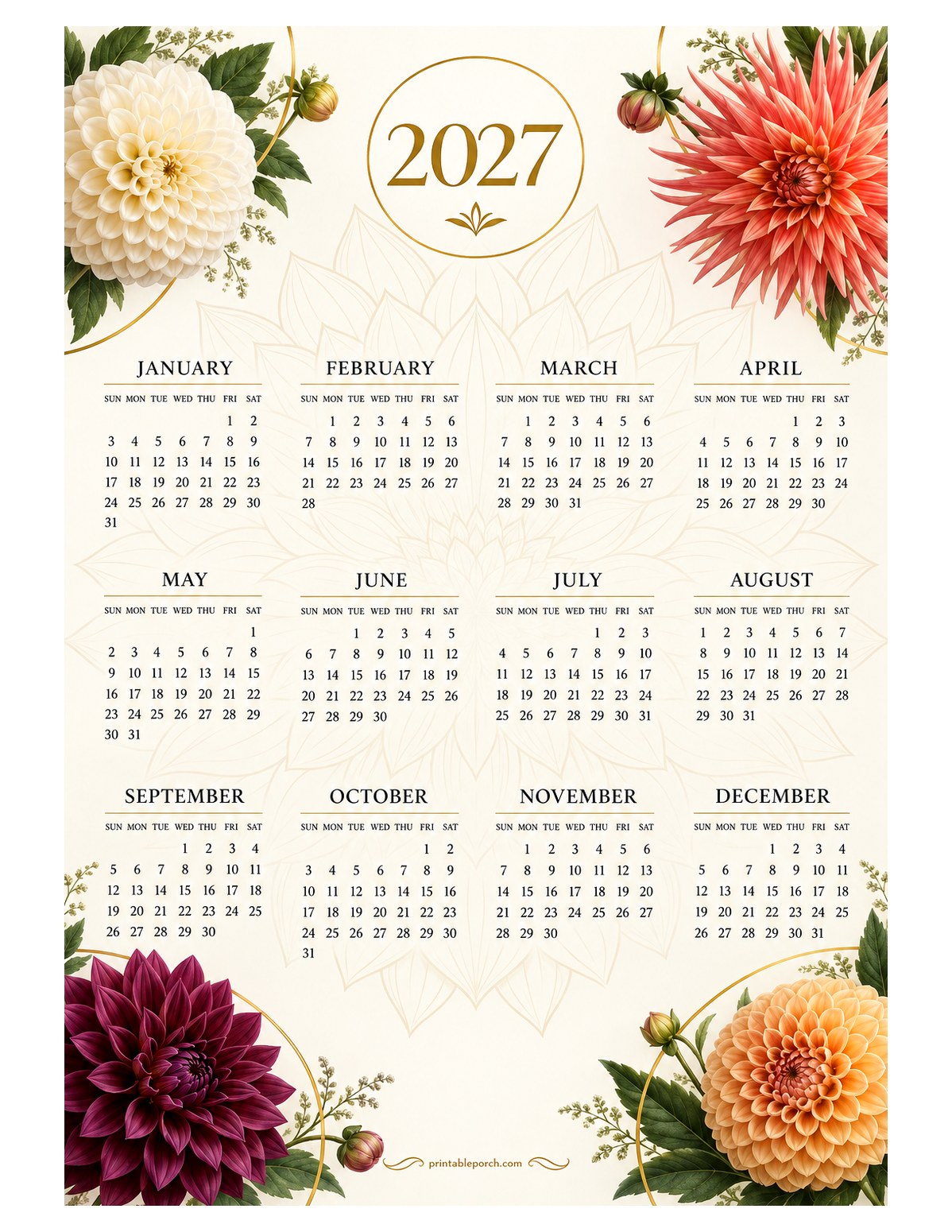
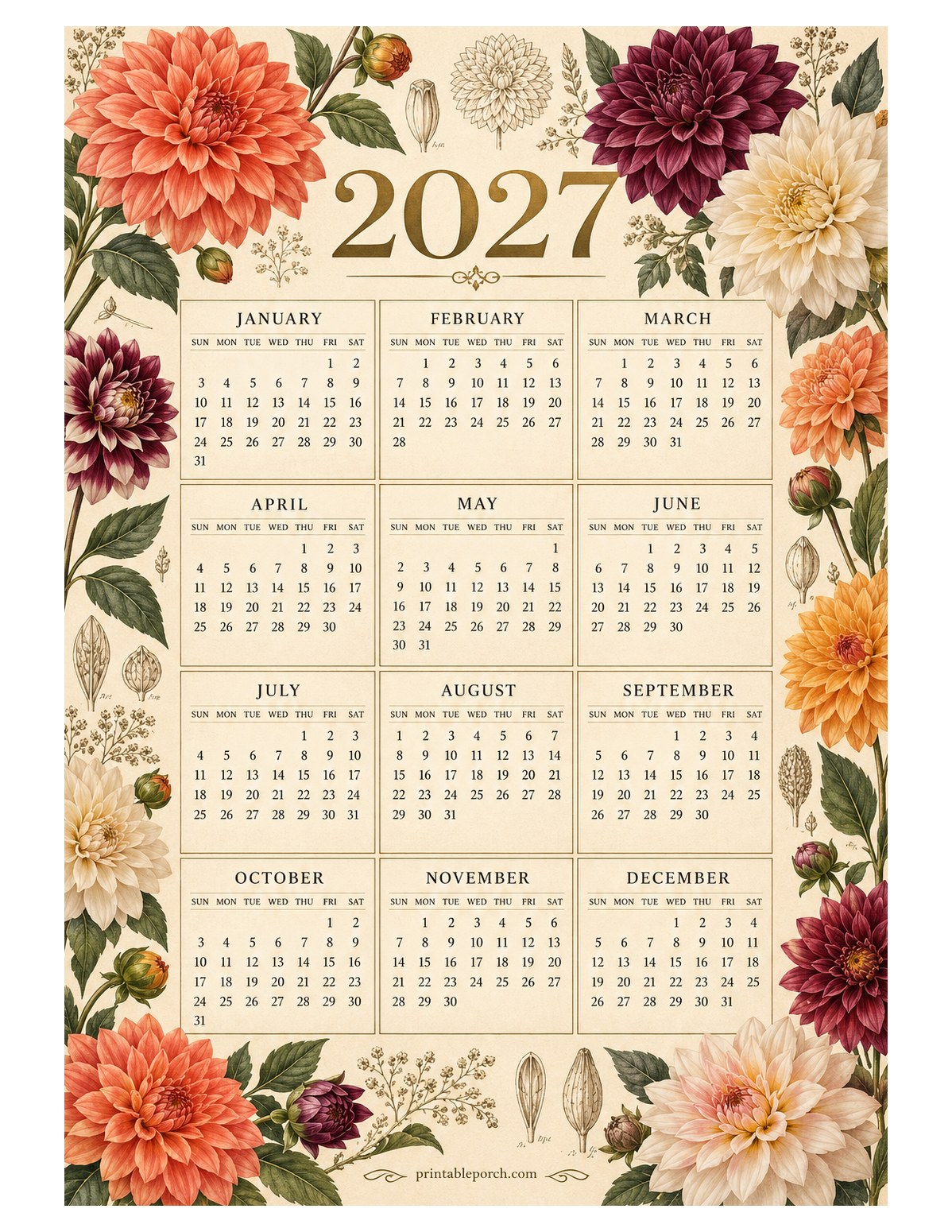
Dahlias are the flowers of late summer, and they carry that feeling all year on these calendars. Every design on this page is a full 2027 year on one sheet, framed by dahlias: the huge dinner-plate blooms, the tight pompons, the cactus types with their spiky petals, in cream, peach, coral, pink, lavender, burgundy and gold.
Each calendar prints on standard US Letter paper. Open the PDF, print it at home, and hang it by the desk, in the kitchen or on the fridge. New designs are added over time, so this page keeps growing.
Yearly Dahlia Calendars 2027
All twelve months of 2027 on a single page, framed by dahlias in every color they come in. Pick the one that matches your room, print it on Letter paper, and it is ready for the wall.
How to Print Your Dahlia Printables
Every sheet on this page is free for personal use. Click Download PDF for a print-ready file sized for US Letter (A4 works too - choose "Fit to page" in the print dialog), or Print to send the sheet straight to your printer. Plain paper is fine for a desk or a fridge; a heavier 28 lb / 110 gsm sheet stays flat on a wall and takes color better.
The monthly calendars come in matching sets of twelve, so you can print the whole year at once with Full 2027 Year PDF, punch two holes along the top and hang the stack on binder rings - or take it to a copy center for spiral binding. New Dahlia printables are added to this same page, so bookmark it and check back.
About the Dahlia
The dahlia is the national flower of Mexico, where it grew wild in the mountains long before anyone thought of it as a garden plant. The Aztecs grew it for its edible tubers and used the hollow stems to carry water. Spanish botanists brought seeds to Madrid at the end of the 18th century, and the flower was named after Anders Dahl, a Swedish botanist and student of Linnaeus. Within a few decades dahlias had spread across Europe, and Victorian gardeners were already crossing them into hundreds of new forms.
A flower of endless shapes
No other garden flower comes in so many shapes and sizes. Growers sort dahlias into more than a dozen groups: single, anemone, collarette, waterlily, decorative, ball, pompon, cactus, semi-cactus and more. Blooms range from the size of a coin to dinner-plate giants over ten inches across. Every color exists except true blue, and many varieties are two-toned, with tips or edges in a second shade. Café au Lait, with its soft blush and cream petals, is the most photographed dahlia in the world and a favorite for weddings.
When they bloom
Dahlias start flowering in midsummer and keep going until the first frost. In most of the United States that means July to October, with September and early October as the peak. This is why dahlias are the signature flower of late-summer markets, harvest weddings and autumn bouquets. The more you cut them, the more they bloom.
Growing dahlias
Dahlias grow from tubers planted in spring after the soil has warmed, in full sun and well-drained ground. Tall varieties need a stake at planting time, since the stems are hollow and snap in wind. Pinching the tips of young plants gives bushier growth and more flowers. In zones 8 and warmer the tubers can stay in the ground with a mulch; in colder areas they are dug up after frost blackens the foliage, dried for a few days and stored in a cool, dark place until spring.
A few things worth knowing
Dahlias are related to sunflowers, daisies and chrysanthemums, all members of the aster family. The tubers are edible and taste somewhere between a potato and a carrot, which is how the Aztecs used them. Cut dahlias last longest if the stems are dipped in very hot water for a few seconds right after cutting. And the dahlia is the official flower of the city of Seattle, which holds a dahlia show every year at the end of summer.